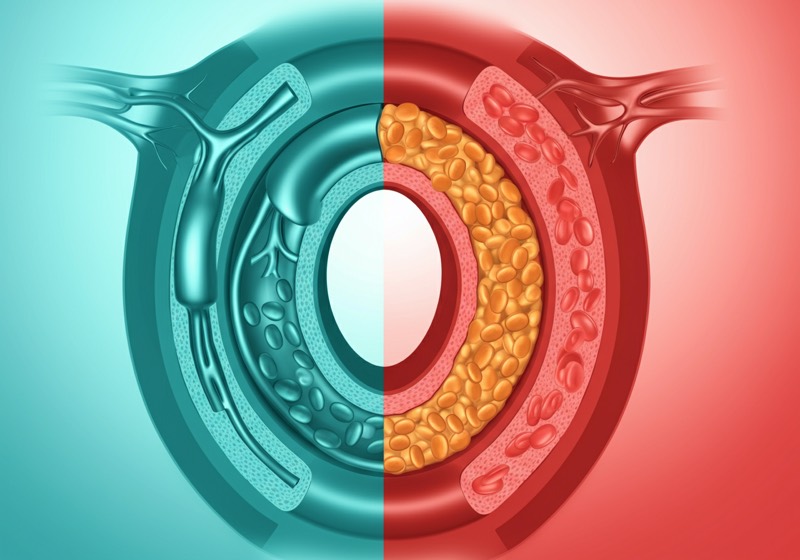
A cholesterol test is one of the most ordered blood tests in medicine — yet most people leave the lab with little understanding of what their numbers actually mean. "Your cholesterol is a bit high" is not a useful clinical communication. Understanding the full lipid panel is essential for accurately assessing cardiovascular risk.
The Four Core Numbers
Total Cholesterol — a combined measure that has limited value on its own. You can have high total cholesterol with excellent HDL and fine LDL. Context matters far more than the headline number.
LDL-C (Low-Density Lipoprotein) — the primary target of cardiovascular risk management. LDL particles can penetrate artery walls and, when oxidised, trigger inflammatory plaque formation. Target depends on overall risk: below 3.0 mmol/L for most people, below 1.8 mmol/L for high-risk individuals.
HDL-C (High-Density Lipoprotein) — removes excess cholesterol from peripheral tissues and returns it to the liver. Higher is better. Men should aim above 1.0 mmol/L, women above 1.3 mmol/L.
Triglycerides — a form of fat derived primarily from carbohydrate and alcohol intake. Elevated levels (above 1.7 mmol/L) independently increase cardiovascular risk and are often a marker of insulin resistance.
Beyond Standard Testing: ApoB and LDL-P
Emerging evidence suggests that the number of LDL particles (LDL-P) — measured by ApoB — is a better predictor of cardiovascular risk than LDL-C concentration alone. Two people can have identical LDL-C with vastly different particle counts and risk profiles. Ask your practitioner whether ApoB testing is appropriate for you.
What Raises Cholesterol?
- Saturated and trans fats — directly raise LDL-C
- Refined carbohydrates and sugar — raise triglycerides and lower HDL
- Physical inactivity — reduces HDL and raises triglycerides
- Genetics — familial hypercholesterolaemia affects 1 in 250 people
- Hypothyroidism — commonly elevates LDL-C