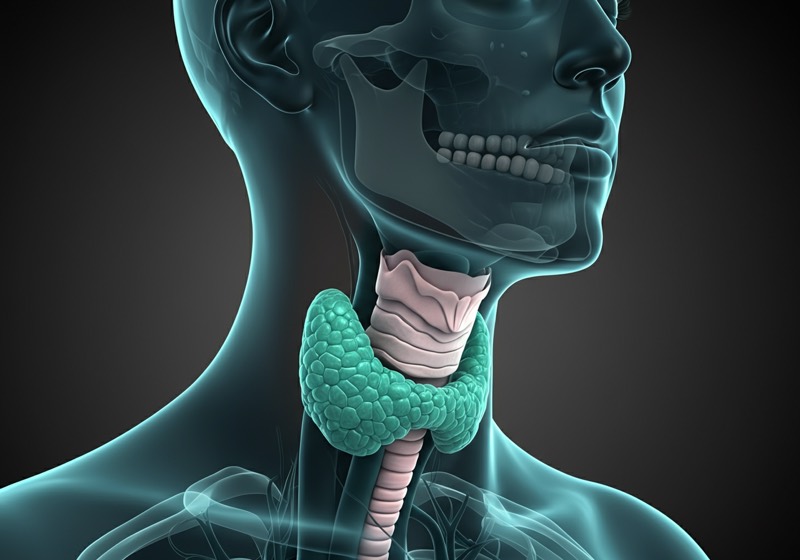
The thyroid is a 25-gram butterfly-shaped gland at the base of your neck — and it controls the speed of virtually every biological process in your body. When thyroid function is impaired, nothing works optimally: your metabolism slows, your temperature regulation breaks down, your digestion stalls, your mood deteriorates, and your cognition fades. Yet thyroid disorders are among the most underdiagnosed conditions in medicine, partly because their symptoms overlap with depression, chronic fatigue, and normal ageing.
The Thyroid Hormone Cascade
The hypothalamus detects metabolic need and releases TRH (thyrotropin-releasing hormone). This signals the pituitary to release TSH (thyroid-stimulating hormone). TSH then instructs the thyroid to produce T4 (thyroxine) — a relatively inactive prohormone — which is converted to the active T3 (triiodothyronine) primarily in the liver, kidneys, and other peripheral tissues.
This means a problem can exist at any step in the cascade: in the pituitary, the thyroid gland itself, or in the conversion of T4 to T3. Standard TSH-only testing misses problems in peripheral conversion.
Hypothyroidism: The Slow-Down
- Weight gain without dietary change — metabolism slows
- Cold intolerance — reduced heat production
- Constipation — slowed gut motility
- Dry skin and hair loss — reduced cellular turnover
- Depression and brain fog — impaired neurotransmitter function
- Elevated LDL cholesterol — thyroid regulates cholesterol metabolism
- Heavy or irregular periods
Hyperthyroidism: The Speed-Up
- Weight loss despite normal appetite
- Heart palpitations and raised resting heart rate
- Heat intolerance and excessive sweating
- Anxiety, restlessness, and tremor
- Loose stools or diarrhoea
- Eye changes (in Graves' disease — the most common cause)
What to Test
A comprehensive thyroid panel includes TSH, free T4, free T3, and thyroid antibodies (TPO and TgAb — elevated in autoimmune thyroiditis, the most common thyroid disorder). TSH alone is insufficient for a complete clinical picture.