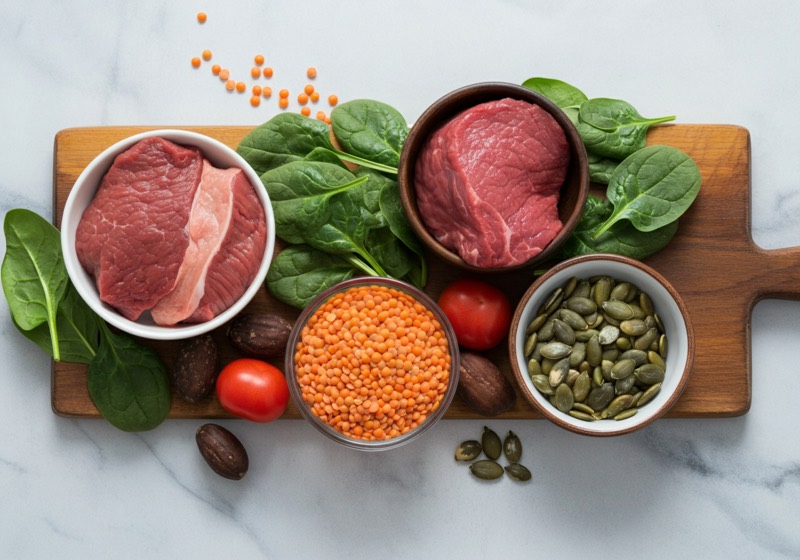
Iron deficiency is the most common nutritional deficiency worldwide. Yet despite its prevalence, it frequently goes undiagnosed for months or even years — because many of its symptoms are easy to dismiss as "just being tired."
Why Iron Matters
Iron is essential for producing haemoglobin, the protein in red blood cells that carries oxygen from your lungs to every cell in your body. Without enough iron, your cells are starved of oxygen — and that affects everything from your brain to your muscles.
Signs You Might Be Iron Deficient
- Persistent fatigue that doesn't improve with rest
- Brain fog, difficulty concentrating
- Pale or yellowish skin
- Brittle nails or spoon-shaped nails (koilonychia)
- Hair thinning or increased shedding
- Shortness of breath on exertion
- Cravings for non-food items (pica) — ice, dirt, chalk
- Restless legs, especially at night
Who Is Most at Risk?
Women of reproductive age (due to menstrual blood loss), pregnant women, endurance athletes, and vegetarians/vegans are the groups most commonly affected. But men and post-menopausal women can also be deficient — often due to GI blood loss from conditions like ulcers or coeliac disease.
The Difference Between Iron Deficiency and Anaemia
Iron deficiency exists on a spectrum. In the early stages, your iron stores (ferritin) are depleted but you aren't yet anaemic. You can feel terrible — exhausted, foggy, cold — while your haemoglobin is still technically normal. A full iron panel (ferritin, serum iron, transferrin saturation) catches deficiency early, before it progresses.